
Pokémon TCG Guides
How to Read a Pokémon Card: A Beginner’s Guide
Aug
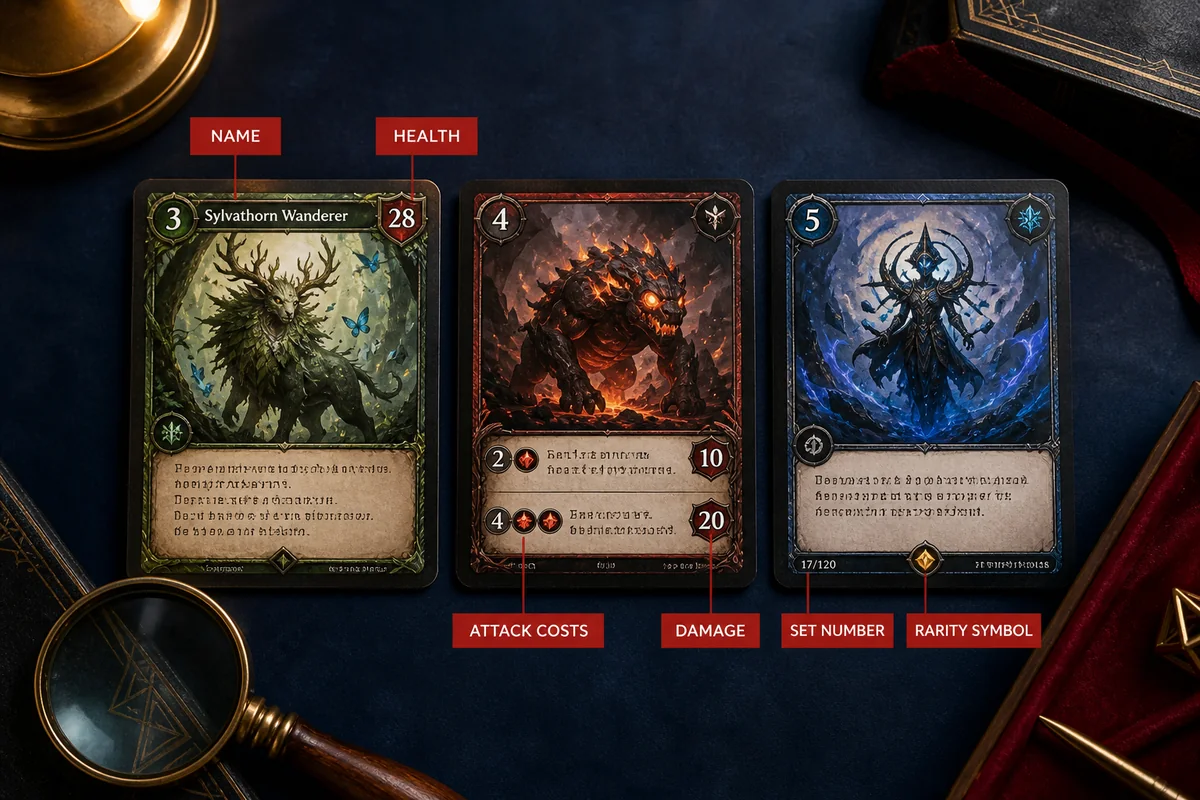
Learning how to read a Pokémon card starts with a simple top-to-bottom check: identify the card name and stage, read its HP and type, understand the attack costs and effects, then finish with the set number and rarity mark. Once you know where these details appear, even an unfamiliar card becomes much easier to understand.
This beginner-friendly guide explains the parts of a modern Pokémon TCG card without assuming that you already know the game. Card layouts have changed across different eras and languages, so use the printed wording on the card and the current official rules whenever an older design looks different.
How to read a Pokémon card at a glance
- Read the name and evolution stage. These usually appear across the top of the card.
- Check HP and type. HP shows how much damage the Pokémon can take before it is Knocked Out.
- Study Ability and attack text. Read costs, damage and any conditions from left to right.
- Review Weakness, Resistance and Retreat Cost. These affect battle decisions.
- Find the set number and rarity symbol. These help identify the exact printing.
1. Card name, category and evolution stage
The name identifies the Pokémon represented by the card. Nearby wording may describe whether it is a Basic Pokémon, a Stage 1 or Stage 2 evolution, or a special card type. A Basic Pokémon can generally be played directly to the Bench, while an Evolution card normally needs the earlier stage already in play. Follow any special rule box printed on the card because named mechanics and special categories can change how the card works.
Do not identify a card only by its artwork. The same Pokémon can appear in many sets, languages and printings. The exact card is determined by a combination of name, set information, collector number, artwork and other printed details.
A practical way to learn how to read a Pokémon card is to compare two cards from the same set and locate the same information areas on each one.
2. HP, type and the top-right symbols
HP means Hit Points. During a game, damage counters build up on the Pokémon. When the damage equals or exceeds its HP, the Pokémon is Knocked Out. The symbol beside the HP identifies the Pokémon’s type for that card. A character can appear under different types in different products, so read the symbol on the individual card rather than relying on memory.
Some cards include extra labels, rule boxes or mechanic names near the top. Treat those as part of the card’s official identity. If you are learning with a mixed collection, compare the wording against the official Pokémon TCG information hub and the current rulebook for the format you intend to play.
3. Abilities, attacks, Energy costs and damage
An Ability is normally labeled as such and explains when or how it can be used. An attack line includes its name, the Energy required to use it, a damage value when applicable, and effect text. Energy symbols to the left of the attack show the cost. A Colorless requirement can usually be paid with any Energy type, while a typed symbol requires the matching Energy.
Read the complete sentence before calculating damage. Small words matter: “before,” “after,” “for each,” “up to,” and “you may” can change the outcome. A plus sign, multiplication sign or dash next to a number also signals that the printed number needs additional context. If two effects seem to conflict, consult the current official Pokémon TCG rulebook.
4. Weakness, Resistance and Retreat Cost
Weakness shows a type that can increase damage received, often with a multiplier. Resistance shows a type against which damage may be reduced. The exact calculation is printed on the card and can vary by era, so never assume every card uses the same value.
Retreat Cost appears near the bottom of many Pokémon cards. It shows how much Energy normally must be discarded to move the Active Pokémon to the Bench. Trainer effects, Abilities and special rules may change that cost. A card with no printed Retreat Cost is not automatically the same as a card whose cost has been reduced by an effect.
5. Set symbol, collector number and rarity
The bottom area is essential when you want to identify a specific printing. The collector number is commonly shown as one number over another, such as 25/198. The first number is the card’s place in the numbered set; the second usually represents the standard numbered set size. Some special cards use numbers beyond that printed set size.
Knowing how to read a Pokémon card correctly also helps prevent two similar-looking printings from being confused with one another.
Depending on the era, you may also see a set symbol, set abbreviation, rarity mark, regulation mark, copyright line and illustrator credit. Rarity systems evolve, so avoid applying one era’s symbols to every card ever printed. If you need to identify a release, the site’s English Booster Boxes and Japanese Pokémon Cards sections can help you browse products by language and range, while an official card database can confirm card-specific details.
6. Rules text, regulation marks and legal lines
Rules text explains what a card does in play. Read it literally and in full. Regulation marks are used in some organized-play systems to help determine format legality, but legality changes over time and by event. A card being genuine or collectible does not automatically mean it is legal in every tournament format.
The copyright line, language, illustrator credit and production details can also help distinguish printings. They should be considered together rather than used as a single authenticity test. If a card seems unusual, compare several features and consult official guidance instead of relying on one photo or one social-media checklist.
Once you know how to read a Pokémon card, the legal line and illustrator credit become useful confirmation details rather than easy-to-miss fine print.
How to handle a card while reading it
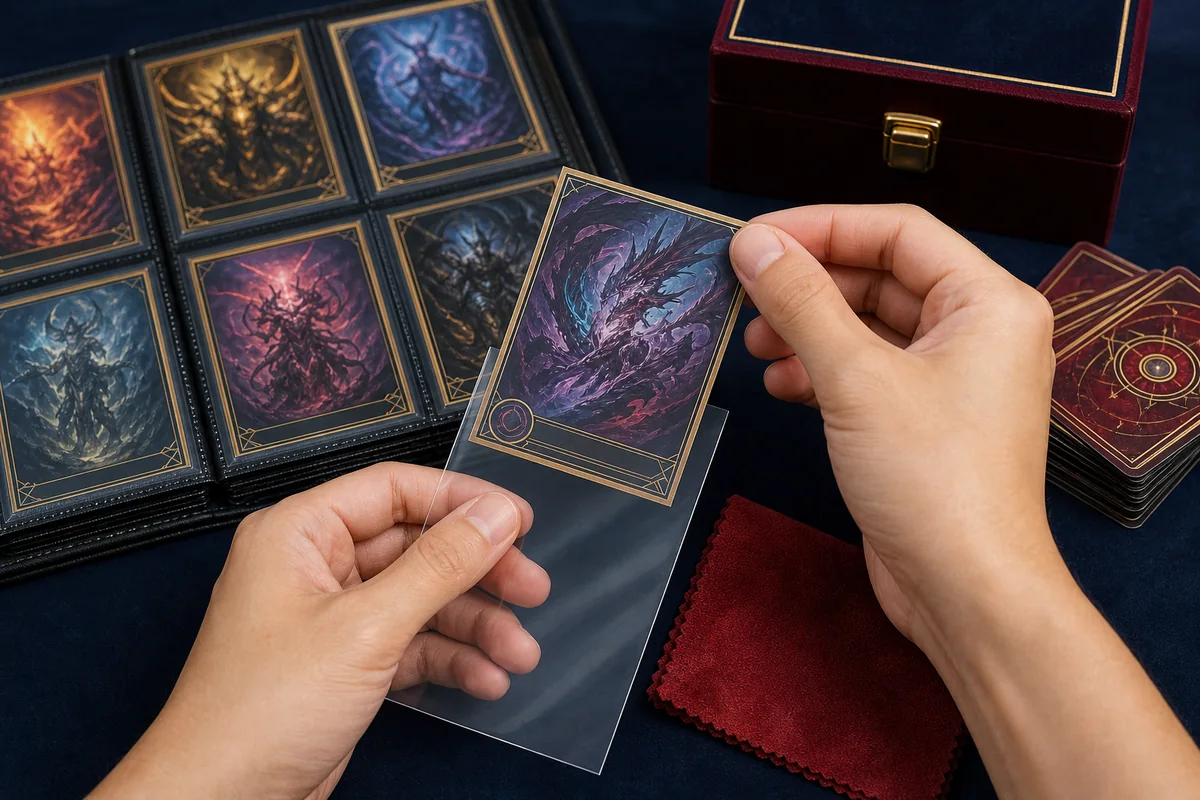
Use clean, dry hands and a clean work surface. Hold a card by its edges where practical, keep food and drinks away, and avoid repeatedly bending it toward strong light. If the card is important to you, place it in an appropriate sleeve after inspection. For broader preservation principles, the Library of Congress paper-care guidance recommends clean handling, stable storage and protection from damaging environmental conditions.
Take your time while learning how to read a Pokémon card so the inspection itself does not create edge wear, fingerprints or accidental bends.
Common mistakes beginners make
- Using artwork as the only identifier: one character can have many different cards.
- Ignoring effect text: the printed damage number may not be the final result.
- Confusing set number with card value: a collector number identifies a printing; it does not state a market price.
- Applying modern rarity symbols to older cards: layouts and rarity systems change.
- Assuming language changes the basic anatomy: many areas are similar, but wording, numbering and releases can differ.
- Using only one feature to judge authenticity: genuine identification requires several consistent details.
Frequently asked questions
These short answers reinforce how to read a Pokémon card when you are sorting a new collection or comparing unfamiliar printings.
What do the numbers at the bottom of a Pokémon card mean?
They usually show the card’s collector number and the size of the standard numbered set. A number above the normal set size can indicate a special numbered card, but the exact convention depends on the release.
Does higher HP mean a card is rarer?
No. HP is a gameplay statistic, not a universal rarity scale. Rarity, condition, printing, demand and other factors are separate.
Where can I practice identifying card details?
Start with a few cards from the same set and compare the same locations on each card. You can also browse the Pokémon Cards Worldwide shop to see clearly labeled product ranges, then confirm card-specific information in an official database.
Final checklist
To remember how to read a Pokémon card, scan from top to bottom: name and stage, HP and type, Ability or attacks, Weakness and Resistance, Retreat Cost, then set and rarity information. Read every effect completely, compare several identifiers when confirming a printing, and handle the card carefully. That routine works for beginners and remains useful as your collection grows.
